


Rare urban wildlife in Edmonton and how to spot it


One June, a bull elk walked through the middle of Edmonton, and no one even noticed.
It first showed up on a wildlife camera in the northeast. Two weeks later, it popped up again in the southwest. It had used the North Saskatchewan River Valley to move through the city quietly, likely pushed out of its usual habitat by wildfires. Rare to the Edmonton area, the elk didn’t stick around, but it made its way through the city right under our noses.
Thanks to where Edmonton sits, right between prairie and boreal forest, we’re in a zone called the Aspen Parkland, and it acts like a meeting point for species from both directions. Add in a relatively intact river valley system, and you’ve got a massive — and hidden — corridor for wildlife.
City of Edmonton
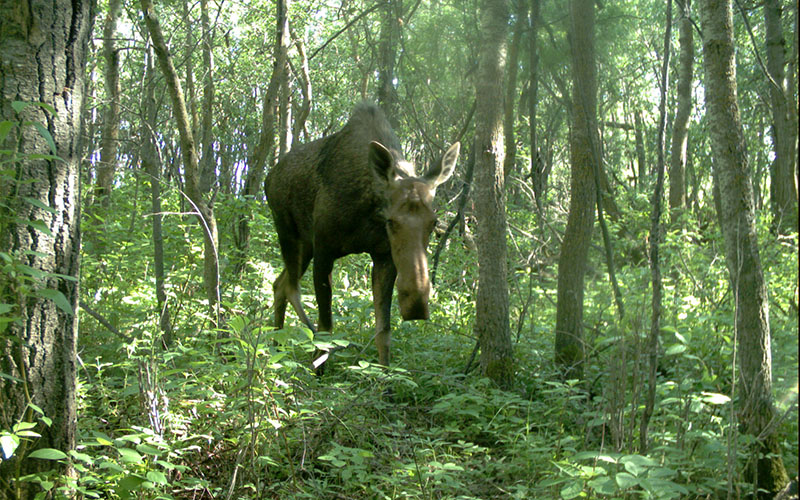
The city’s wildlife camera project, which ran from 2018 to 2022, used remote cameras throughout the city to confirm what’s out there — and it’s far more than just coyotes and jackrabbits. Here are some other species of animals we don’t often think of as calling Edmonton home:
- A fisher, a secretive carnivore not even listed in the city’s 2008 biodiversity plan
- A cougar, captured once on camera outside the River Valley
- Least weasels, caught carrying voles on camera
- Badgers, elusive but still present (some Edmontonians have seen them in their backyards)
- Moose
- Raccoons and Eastern gray squirrels, both slowly expanding into Edmonton, likely due to climate change
- Bird species like the veery and Canadian coot have been confirmed recently via audio recording
If you’re hoping to see something yourself, Catherine Shier, a conservation coordinator at the Edmonton Valley Zoo, has advice: find a quiet spot and sit still. Give it at least 30 to 45 minutes.
Most animals avoid people, but if you’re patient, you’ll start to notice movement. Bigger animals usually move at night; birds and smaller mammals come out around dawn or dusk. Shier mentioned spotting a least weasel during one of these quiet sits.
“At the Edmonton Valley Zoo, we work hard to connect people with wildlife. But what I’m realizing more and more is that, in a city like Edmonton, the most impactful interactions people have with wildlife aren’t at the zoo, they’re in their own backyard or out on a trail,” she said.
If you come across an animal that looks injured, especially a baby, the first step is to wait. It might’ve been stashed there by its mother. Observe from a distance, check back in an hour. If it’s injured, contact Wild North, Edmonton’s wildlife rescue group.
“I just want people to provide space for wildlife, appreciate them from afar, and do what they can to help — whether that’s planting native species, giving animals space when they cross paths on the trails, or letting city councillors know they value the River Valley and want it protected.”